
Download a pdf copy of this newsletter
We start every new preschool year at Matjana ready for surprises and expecting the unexpected. Usually there’s plenty of joyful, childish surprises and a few unexpected challenges to cope with. We thought we’d gotten used to overcoming the challenges that come with running a rural early childhood development service. But we never imagined having to cope with anything like the coronavirus pandemic.
The outbreak of the covid-19 led to the unexpected closing of all schools in Eswatini in late March. King Mswati 3, the leader of the Kingdom of Eswatini, announced that schools must close when just a few people in the country had been infected with coronavirus. There were still no deaths.
The prime minister announced a lockdown according to which everyone was supposed to stay at home. Furthermore, gatherings of more than twenty people were banned. The PM also gave advice about how to prevent the virus from spreading. He announced the washing of hands with running water and soaps, use of sanitizers, social distancing and wearing face masks or coverings would reduce the risk of infection.
It was the beginning of the first term, the time of year when we were still trying to build a new family as Matjana preschool teachers. Learners were about to adapt to the routines and rules of preschool and were already showing off the new things they were learning. We were enjoying watching them proudly showing off their new skills. But this year, the pandemic has disturbed learning processes at Matjana and throughout Eswatini.
We dearly miss sharing the learning journey with another group of five year olds. Teachers are responsible to schedule all that should be done in in the preschool day such as learning, writing, constructing using blocks, singing and also playing. The learning and writing part is so amazing. You observe the fast learners and slow learners. This helps the teachers to pay more attention to those who are slow in learning. We know by this time learners are ready to go back to school.
But even if the government were to permit the preschool to reopen, we’re concerned about being able to keep our learners and their families safe. As we know, young kids love to play. When they are gathered it seems the first thing in their mind is to touch one another! They also love sharing toys and sticking them in their mouths from time to time. We lack the water, sanitisers and other things we need to make play safe, as coronavirus infections rapidly increase in the towns of Eswatini.
There are currently over 2900 coronavirus infections and more than 50 people have died in Eswatini. Every day in the past weeks we have been informed of increasing case numbers. The hospitals are only taking critically ill patients. In a country with just over one million people and an already under-resourced health system, the numbers are significant. We need to try as hard as possible to prevent the infection spreading further. Despite the low coronavirus risk for children in developed countries, living conditions in our community, where piped water is an exception and people run out of money for buying soap, create a risk for coronavirus to spread amongst families, if one member is infected.
The lockdown was relaxed in Eswatini in May and we can now move around for essential purposes while wearing a face covering. Students in their final year of high school and those at universities and colleges are back at their studies. But other students, including the Matjana kids are still at home and eagerly awaiting the day they can return to school.
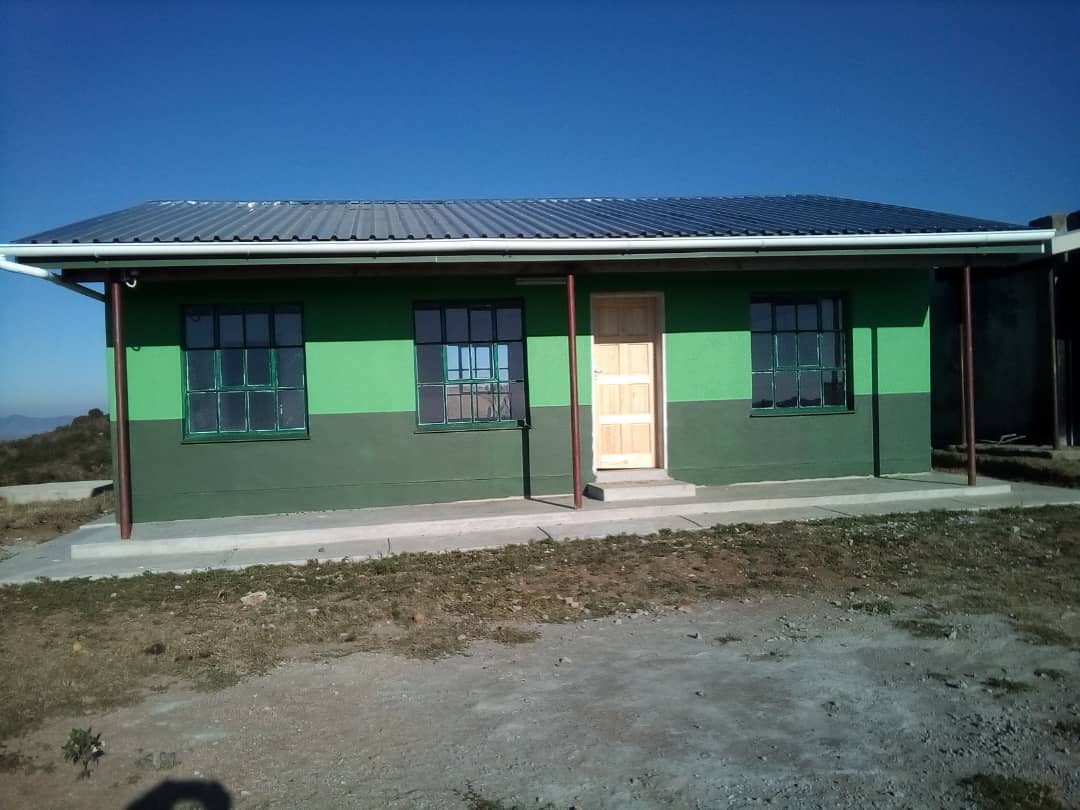
We’ve been using the time away from teaching to do as much as we can under the lock down conditions. Our second classroom has a roof and is looking bright and beautiful. We just wonder how we will manage to wait until the government permits reopening of school to our students.