
Read more about this month’s newsletter here Vol-17-edt-4.pdf
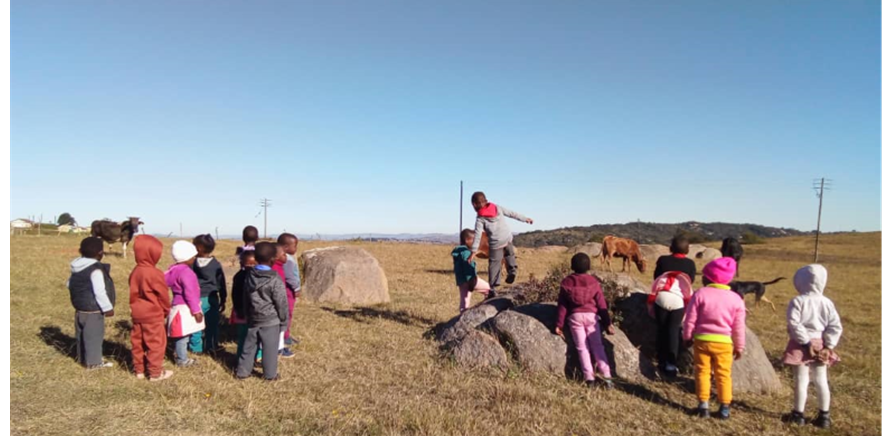
Have you been wondering what Matjana kids do during outdoor activities? There are different methods of teaching pre-schoolers. One of the most enjoyable for the children Is through observing things around the school and outside the school premises, which is what we do during outdoor activities. “It makes teaching easier because the students get to see things with their eyes”, said teacher Nokuphila.
Animals around the school
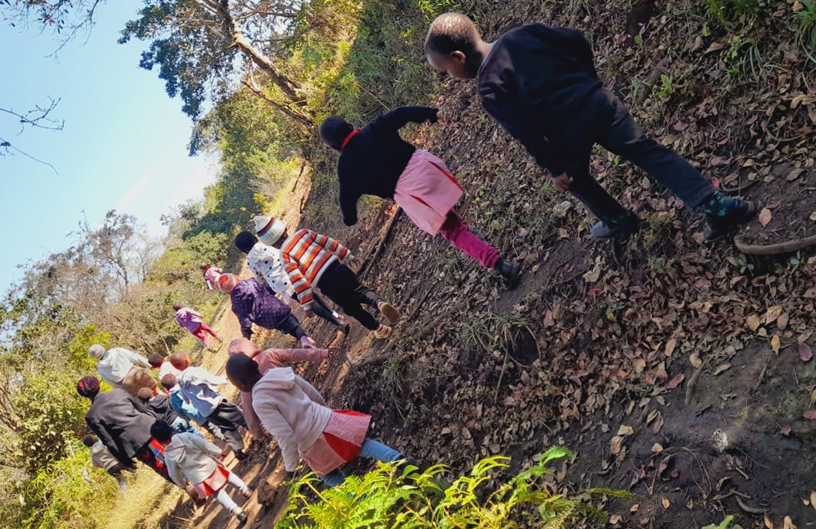
Outdoor activities are determined by the theme for that week, which is taken from the Ministry of Education curriculum. For example, while studying “wild animals” the children move around outside looking for birds and insects like grasshoppers and talking with the teachers about things such as the name, appearance and if the animal is dangerous (e.g. snakes, frogs and caterpillars) or safe to pick up and touch. “This makes the children recognize the different types of animals and their features,” teacher Precious said. They would also go to the nearby stream to look for animals that live in water (another theme from the curriculum).
“Going with the children to the nearby stream makes them enjoy being at school. Even though they know and go to the river when they are at home, going at school gives them a different feeling,” said Khetsiwe. In the river they see animals like small fish, frogs, and crabs. As you can imagine the children ask questions like, “Do they (water animals) not drown in the river?” and “What if the animal no longer wants to stay in the river?” We also talk about what these animals eat, what they eat and how they “breath” in water. Khetsiwe said, “It is always nice for us teachers to go with the children to see water animals, even though we have been to the river before, it always feel like it’s the first time.”
During the “domestic animals” theme, we also go out of the school premises to see cows, dogs and goats which are always wandering not far from the school. We talk about what each group of animals is kept for, for examples cows are kept for kraal manure, ploughing, milk and transporting logs from the forest. Khetsiwe said, “The good thing about talking about animals is that the kids have seen them and already know a lot about them.” The teachers said it is much better teaching the kids about things they see every day rather than teaching about something they have never seen before (such as an octopus in the water animals theme). Khetsiwe mentioned that they do use the Eswatini Government curriculum for Early Childhood Education, but change some of things to suit Matjana Kids.
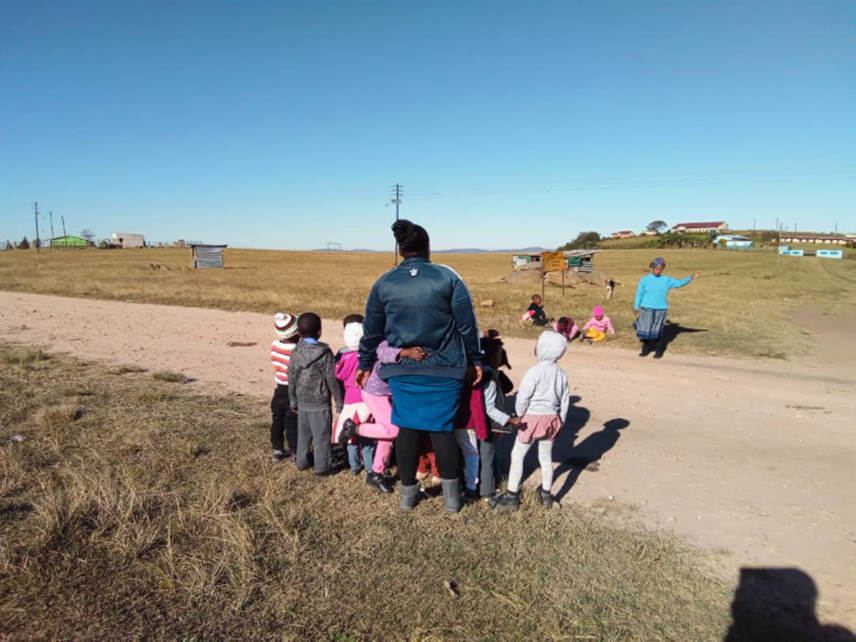
We also teach our children about traffic lights, known throughout southern Africa as ‘robots’. This one is very hard to teach because many Matjana children have never seen the real ones. We show pictures which have the three colors of the robots and tell them what they mean. “We do try our best on this but we are not sure if the kids really understand what we have told them about traffic lights.” We also take the kids to the nearby t–junction to teach them how to cross the road safely, but this is also challenging as our road is not busy, one car would come after 30 mins or more and so there are few opportunities to wait until the cars have gone by.
Field trip outside the community
With the aim of widening our kids experiences (and of course we have seen other kids going out) we are planning to go on a field trip out of the village during the second week of August. We hope to visit places like the airport, game park and the city, where our students might even see real traffic ‘robots’ for the first time. We are looking forward to this exciting adventure.